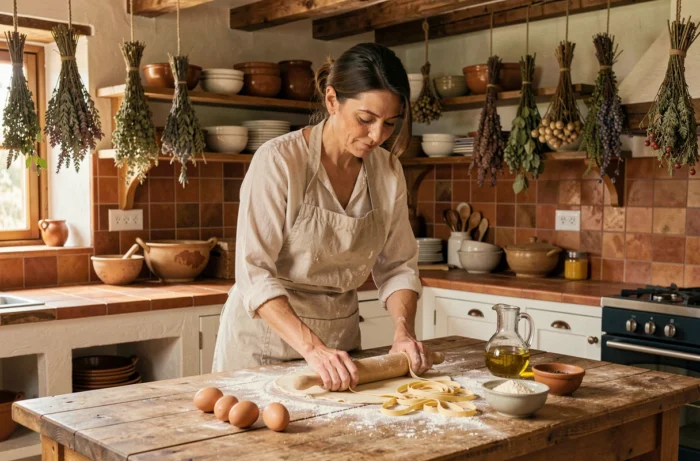
Family cooking often hits the same wall: repetitive menus, approximate management of allergens, and poorly calibrated preparation times. Offering delicious and creative recipes for the whole family requires mastering a few technical levers that go beyond a simple list of ingredients.
Allergens in family recipes: a blind spot to correct
The majority of so-called “family” recipes published online ignore the issue of allergens. Allergen sources, gluten, and certain sulfites must be clearly identified on pre-packaged products used in cooking. When a recipe includes a stock cube, soy sauce, or store-bought puff pastry, systematically checking the allergen list on the label becomes a non-negotiable reflex.
For families dealing with a food allergy in a child, adapting a recipe is not just about removing an ingredient. Cross-contamination during preparation (work surfaces, utensils, shared frying oil) poses a real risk. We recommend dedicating a set of utensils for allergen-free preparations and cooking these dishes first, before handling any risky ingredients.
Among Chez Sylvie’s treats, there is an artisanal approach that favors readable compositions, an asset when trying to control what the whole family consumes.
Family batch cooking: preparation and storage method
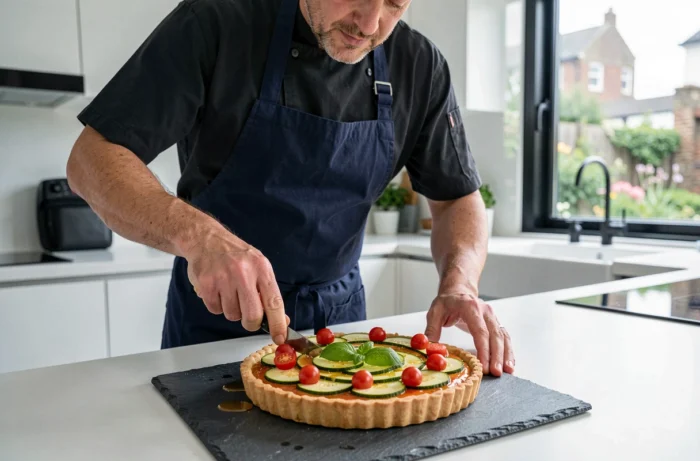
Batch cooking is not just about cooking on Sunday for the week. It is a production method that, when executed well, reduces food waste and secures menu diversity.
Structuring an effective batch cooking session
Grouping cooking by oven temperature saves considerable time. A vegetable gratin, a savory tart, and a dish of roasted vegetables can follow one another without intermediate preheating if the temperatures are close.
The order of preparation matters: start with items that require the most passive time (simmering, baking), then move on to quick preparations (dressings, raw assemblies, sauces). A session planning on paper, even a rough one, avoids downtime.
- Prepare neutral bases in quantity (rice, lentils, pasta) and vary them over several meals with different sauces or toppings
- Cook seasonal vegetables in separate batches to vary textures at serving time (roasted, puréed, in soup)
- Portion immediately after cooling in airtight containers, noting the date and contents
- Reserve the most fragile preparations (salads, raw vegetables) for the first two days and freeze the rest
Storage of homemade tomato sauce
Tomato sauce is a versatile base for family cooking. Homemade tomato sauce keeps for three to four days in the refrigerator in an airtight container. Beyond that, freezing in individual portions remains the safest solution.
For sterilized jar storage, the process requires strict sanitary rigor: jars must be scalded, filled hot, and treated with appropriate heat. Incomplete sterilization creates a real bacterial risk, not just a texture inconvenience.

Vegetable recipes in family cooking: going beyond soy steak
Vegetarian menus are gaining ground in school cafeterias, with strengthened sustainability goals in recent years. This evolution aligns with a concrete expectation from families looking to diversify protein sources without sacrificing pleasure.
Red lentil dahl is a good entry point. Its creamy texture and spicy profile appeal to children when the seasoning is moderate. We observe that adding coconut milk at the end of cooking softens the dish and makes it more accessible to young palates.
Vegetable gratins and tarts that work for families
A vegetable gratin without animal protein holds up as long as the sauce is well-crafted. A béchamel made from cashew nut puree (soaked and then blended with water and nutritional yeast) provides the creaminess and umami flavor that children associate with melted cheese.
The leek tart also works in a vegetarian version: replacing eggs with a mixture of silken tofu and cornstarch creates a filling that holds together when cut. The result mainly depends on the pre-cooking time of the leeks, which must be tender before being poured into the tart shell.
Seasonal menu: building a week of creative meals without repetition
Creativity in family cooking does not come from exotic ingredients. It comes from how we transform the same seasonal vegetable into several distinct dishes throughout the week.
Take zucchini in summer. Grated raw in salad on Monday, in gratin on Tuesday, stuffed on Wednesday, incorporated into a cold soup on Thursday. Each preparation employs a different technique (raw, gratin, stuffed, blended) and alters the perception of the vegetable.
- Vary cooking methods rather than ingredients: the same vegetable roasted, sautéed, puréed, and in soup yields four dishes perceived as different
- Alternate protein families throughout the week (legumes, eggs, fish, meat) to balance without monotony
- Reserve one “creative” meal per week where children participate in the choice and preparation, improving acceptance of new foods
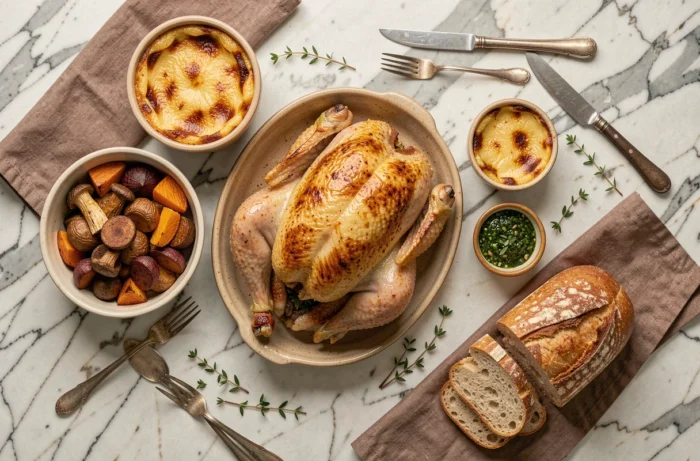
Building a weekly menu is best done by starting with the seasonal vegetables available rather than from recipes. Choose three or four vegetables at the market, then decide on the preparations. This approach limits waste and naturally encourages less conventional combinations.
A simple family dessert like caramelized apples or a seasonal tart is enough to conclude a meal without complicating preparation. Indulgence relies more on the quality of the base product than on the sophistication of the recipe.
Creating family meals that break the routine requires fewer rare ingredients than method: rigorous allergen management, well-planned batch cooking sessions, and varying the same vegetable in multiple textures. The pleasure at the table comes from this technical mastery, which then frees up space for creativity.