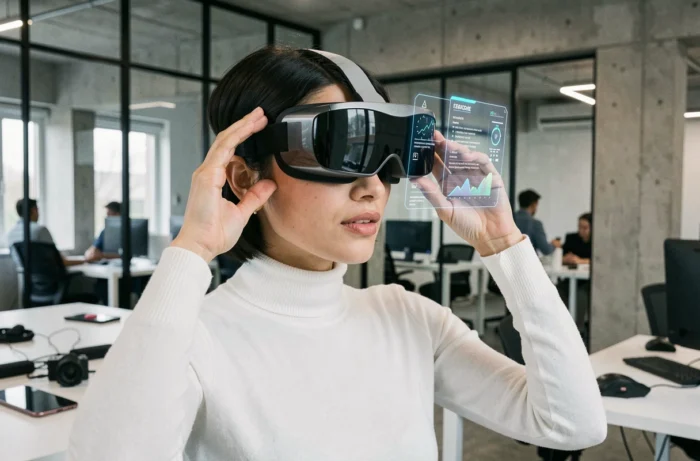
A smartphone folded in half in your pocket, a headset that overlays data onto the real world, a chatbot that writes a meeting report in real-time: these situations, once marginal three years ago, are now part of the daily lives of millions of users in France and Europe. The emerging high-tech trends affect both hardware and the rules imposed on software publishers.
AI Act and transparency: what is changing for consumer products
Since August 2, 2026, any company deploying a chatbot, an image generator, or an automatic writing tool for the European public must comply with transparency obligations regarding artificial intelligence. Clearly indicating that content comes from AI, labeling generated images and videos, technically marking certain content of general interest: these requirements are no longer optional.
The penalties can reach up to 15 million euros or 3% of global revenue. This framework applies to all players, not just the digital giants. An independent studio integrating an image generator into its mobile app is subject to the same rules as an international platform.
The Digital Omnibus Regulation (EU 2026/1744), published in the Official Journal on July 24, 2026, and effective from July 27, 2026, has postponed the heaviest obligations for high-risk systems. However, the rules affecting consumer products are active right now, with a limited transition period until December 2026 for systems already on the market.
By browsing the high-tech articles from The Infos du Geek, one can see how this regulation is reshaping the way publishers present their tools to the public.
Connected devices and smart home: beyond the gadget
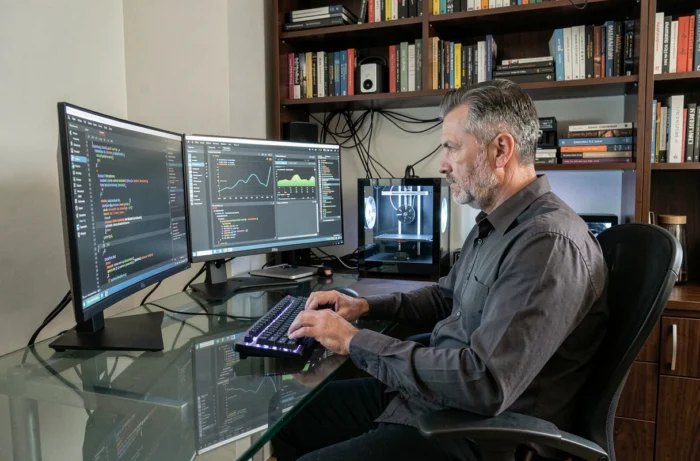
The connected home is no longer just about turning on a lamp from your phone. Recent devices integrate air quality sensors, real-time energy management systems, and voice assistants capable of controlling multiple devices simultaneously. The common thread among these solutions: they leverage artificial intelligence to adapt their behavior to the actual habits of the occupants.
On the ground, feedback on this point varies. Some users report relevant automations within the first week, while others have to manually adjust scenarios for several weeks before achieving a satisfactory result. The promise of “plug and play” still largely depends on the chosen ecosystem and compatibility between devices.
Here are the criteria that make a difference when choosing:
- Compatibility with the Matter protocol, allowing devices from different brands to communicate without a proprietary gateway
- The system’s ability to operate locally, without a permanent internet connection, to ensure responsiveness and data privacy
- The existence of a single app capable of centralizing all devices, from the thermostat to the shutters to the cameras
A connected product that does not meet these three criteria risks ending up in the drawer of abandoned gadgets after a few months.
Nvidia, Apple, and the race for specialized chips
The embedded computing power today determines what a device can do locally, without sending data to the cloud. Nvidia kicked off the year with its GeForce RTX 50 series, designed for both gaming and executing artificial intelligence models directly on the user’s machine.

On Apple’s side, the strategy relies on vertical integration between the chip and the operating system. Processing AI requests on the device itself (on-device processing) reduces latency and limits reliance on the network. This is a strong argument for users handling large video files or creative projects.
This race for specialized chips has direct consequences on the market:
- Laptops capable of running language models locally are becoming a distinct category, with dedicated benchmarks
- High-end smartphones integrate NPUs (Neural Processing Units) that accelerate photo editing, real-time translation, and voice transcription
- Graphics cards are no longer evaluated solely on frames per second in gaming but also on their ability to train or execute AI models
Smart glasses and augmented reality: a use still seeking its place
Several manufacturers have presented glasses capable of projecting a screen into the user’s field of vision. Halliday, showcased at the last CES, illustrates the direction taken by the sector: lightweight frames, discreet display, and interaction through gestures or voice commands.
HTC announced its Vive Eagle glasses, positioned as competitors to Ray-Ban Meta. The stakes are no longer limited to technical prowess. It is the battery life, weight, and software integration that determine real adoption. A device that is too heavy or whose battery does not last half a day will not be worn daily, regardless of the display quality.
For professionals, use cases are clearer. VisionX offers specialized glasses for industrial operations, awarded at the CES Innovation Awards. Augmented reality applied to maintenance, logistics, or quality control finds a more fertile ground than in the general public, where the need remains less defined.
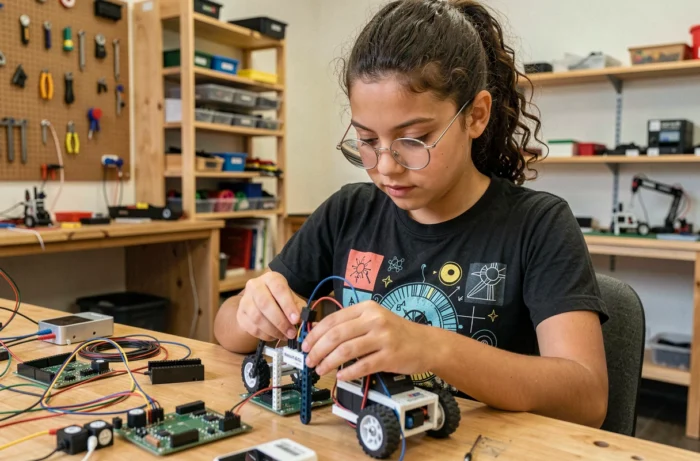
The high-tech trends of this period are not just a list of spectacular products. The European regulation on AI, the growing maturity of connected objects, the specialization of processors, and the emergence of augmented reality are shaping a landscape where adoption depends as much on concrete utility as on raw performance. The coming months will reveal which devices will transition from the tech showcase to sustainable daily use.