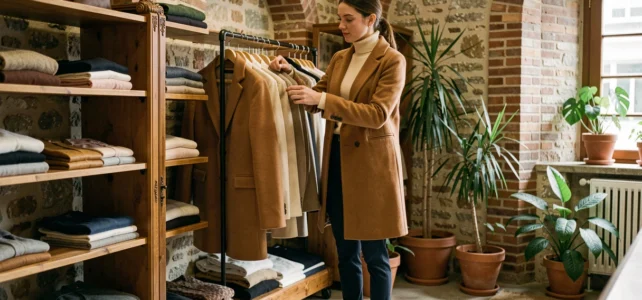
The Rennes clothing market is undergoing a phase of accelerated reorganization. The summer sales of 2026 confirmed a decline in foot traffic in downtown shops, driven both by heatwaves and a sentiment of decreasing purchasing power relayed by local merchant unions. This pressure profoundly alters the clothing choices of Rennes residents and the strategies of independent brands.
Rennes commercial fabric: concrete effects on fashion supply
The personal equipment segment (clothing, shoes, accessories) has been one of the most vulnerable in French city centers for about a decade. In Rennes, this phenomenon is reflected in a faster turnover of brands on streets like rue de la Monnaie and rue Le Bastard.
The independent shops that resist are adopting a model of mini-collections wearable across multiple seasons. Rather than betting on highly seasonal pieces, they favor versatile basics: unlined jackets, mixed fabric trousers, structured linen dresses. The goal is to reduce unsold stock while offering clothing suitable for increasingly hot summers.
We also observe a shift towards second-hand and consignment sales. Several Rennes addresses have expanded their offer of second-hand textiles, a movement that attracts price-sensitive customers without sacrificing style requirements. To check out the fashion section on Rennes Blog, field reports confirm this underlying trend in the metropolitan area.
Colors and materials for the 2026 back-to-school season in Rennes
The season’s palette is organized around earthy tones and faded blues. Deep burgundy, already present on Parisian runways earlier this year, is beginning to establish itself in Rennes’ shop windows. Neutral tones (sandy beige, ecru, stone gray) dominate everyday pieces.
Mixed linen and textured cotton are gradually replacing lightweight synthetics in the offerings of local designers. This choice of materials responds to a dual constraint: thermal comfort during heat episodes and a growing demand for less processed fibers.
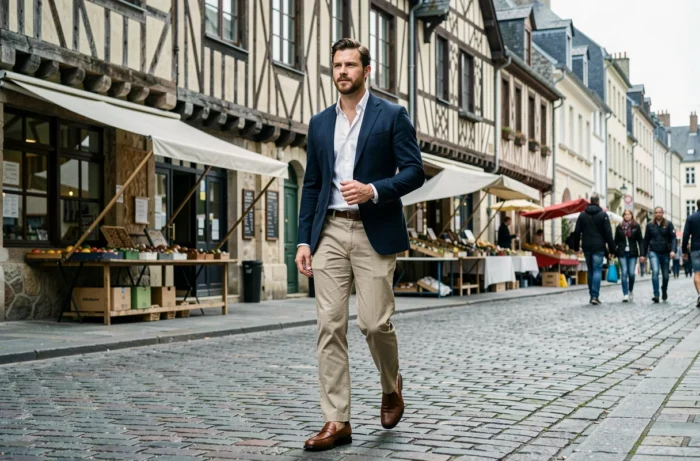
- Unstructured washed linen jackets, worn both in mid-season and on summer evenings, with a deliberately loose fit
- High-waisted cotton twill trousers, available from khaki to off-white, in straight or slightly flared cuts
- Midi dresses with wide straps, often offered in solid colors to facilitate accessorizing
On the footwear side, thick-soled sandals and soft loafers are competing for the back-to-school season. White sneakers remain a staple, but we recommend keeping an eye on the return of two-tone derbies, already spotted at several retailers in the Sainte-Anne district.
Accessories and standout pieces: what distinguishes Rennes style
Rennes is home to one of the five Esmod schools in France, and this proximity to fashion training nurtures a pool of creators that feeds local shops. Accessories made in small series (ceramic earrings, vegetable-tanned leather bags, screen-printed scarves) are a strong marker of Rennes’ wardrobe.
The compact crossbody bag is establishing itself as the key accessory of the season. Worn across an oversized jacket or a flowing dress, it structures the silhouette without weighing it down. Grainy leather models in cognac or matte black work with most looks.
Discreet jewelry is making a strong comeback after several seasons of statement pieces. Layered fine chains, adjustable rings in gold-plated brass, textile brooches: measured accumulation replaces the flashy single piece. This approach aligns with the local dressing temperament, more focused on subtle assembly than on spectacular effects.
Building sustainable looks without multiplying purchases
The underlying trend in Rennes is no longer about accumulating trendy pieces renewed each season. A streamlined wardrobe of ten to fifteen well-chosen pieces covers most situations, from the office to weekend outings.
The capsule wardrobe logic, long confined to specialized blogs, is now reflected in the discourse of independent Rennes shops. Several of them offer “complete wardrobe” selections in their windows, with ready-to-wear combinations.
- An unlined blazer in textured fabric, a pivot between dressed-up and casual looks
- Two to three tops in natural materials (organic cotton, modal), in compatible colors
- A versatile pair of shoes that works with both jeans and dress pants
- A signature accessory (watch, scarf, bag) that personalizes each outfit effortlessly
This approach reduces the annual budget allocated to fashion while maintaining a consistent level of style. It also responds to the local economic reality: when purchasing power contracts, it’s better to invest in high-rotation pieces than to accumulate clothes worn twice.
The gloomy assessment of the summer sales of 2026 in Rennes is not just a commercial signal. It reflects a changing relationship with clothing: fewer impulsive purchases, more reflection on the durability of pieces and their adaptability to real climatic conditions. The shops that have understood this are already adjusting their collections accordingly.