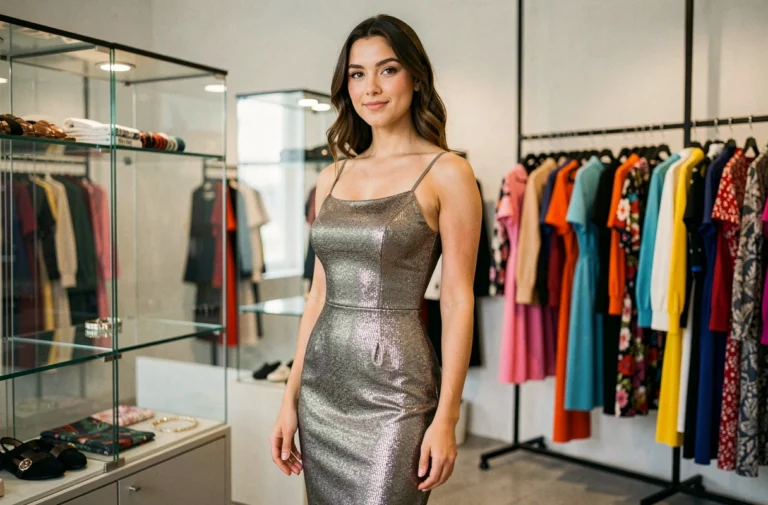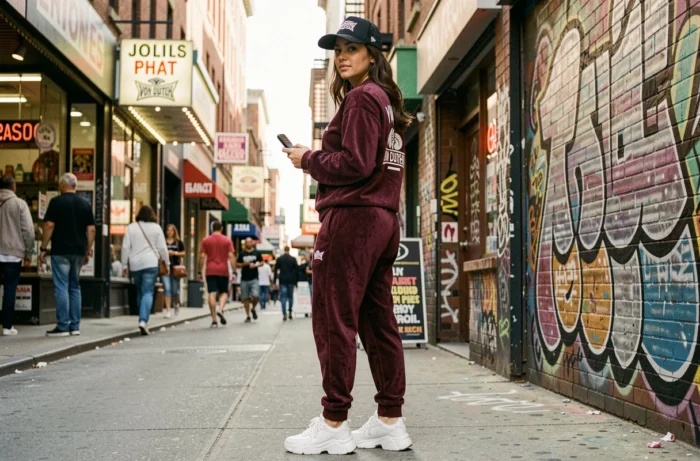
The term Y2K refers, in fashion vocabulary, to the set of dress codes that emerged between 1997 and 2006: low-rise, velvet, oversized logos, shiny materials, and saturated colors. These codes are no longer just a fleeting nostalgia. Several brands have reintroduced these lines in their recent collections, and the physical retail market continues to open dedicated points of sale for this aesthetic, as illustrated by the announcement of a first Hollister store in Leicestershire planned for 2026.
Clubwear and party girl: the Y2K codes that structure the current revival
The resurgence of the 2000s is not just about pulling a velvet tracksuit out of the closet. Search data shows a polarization around two specific universes: clubwear and the so-called “party girl” style. These terms saw a marked increase in searches in 2025, indicating that demand is shifting towards festive, fitted, often shiny pieces, rather than a general nostalgic look.
Specifically, this translates into the return of very identifiable pieces: micro-shorts, low-rise denim, asymmetrical tops, rhinestone accessories. The adoption of these pieces by retailers has significantly increased in recent seasons. Among the brands established in 2000, some had precisely built their identity on this festive register, which explains the relevance of their return today.
The current Y2K style also borrows from the pop culture of the time. The image of Britney Spears as a schoolgirl, Justin Timberlake’s full denim look, Aaliyah’s bold streetwear: these references function as a visual lexicon that the new collections cite and reinterpret.
Juicy Couture, Guess, Von Dutch: anatomy of three brand comebacks from the 2000s
Not all brands from the 2000s have followed the same trajectory. Three cases illustrate distinct revival strategies.
Juicy Couture and the reactivation of velvet
Founded in 1997 in Los Angeles, Juicy Couture single-handedly defined the glamorous casualwear of the 2000s. The velvet tracksuit, available in dozens of colors and worn by celebrities from Paris Hilton to Jennifer Lopez, became an instantly recognizable symbol. After a period of withdrawal, the brand has relaunched collections that modernize its classics while retaining the vibrant and comfortable aesthetic of its beginnings.
Guess and the revisited California glamour
Guess existed before the 2000s (the brand dates back to 1981), but it was this decade that propelled it into a new dimension. Sultry advertising campaigns, signature cut jeans, and logoed accessories have anchored Guess in the Y2K imagination. The brand never completely disappeared, giving it an advantage: it can capitalize on its continuity rather than a simple “return.”
Von Dutch and strategic collaboration
The Von Dutch trucker cap remains one of the most iconic accessories of the period. The recent Aeropostale x Von Dutch collaboration, launched in 2026, illustrates how the Y2K logo culture is being reinjected into the market through targeted partnerships. This type of operation targets a generation that did not experience the original but recognizes the codes through social media.
Y2K pieces to prioritize for an authentic look
Reproducing a credible 2000s style requires understanding which pieces truly carry the identity of the period and which fall into the realm of cliché devoid of meaning.
- The low-rise denim remains the foundational piece of the Y2K wardrobe. Opt for straight or slightly flared jeans over skinny ones, which belong more to the end of the decade.
- The velvet tracksuit (Juicy Couture or equivalent) works better as a complete set than as an isolated piece. Wear it with chunky sneakers or heeled mules to stay within the era’s register.
- Logoed accessories (caps, bags, visible buckle belts) provide visual grounding without imposing a complete silhouette. One strong accessory is enough.
- Rhinestone tops, shiny materials, and asymmetrical cuts fall within the clubwear and party girl register, which constitutes the most dynamic segment of the current revival.
From runways to retail: why Y2K has become a lasting creative axis
The Y2K trend has been institutionalized in fashion shows since the 2021-2022 collections. Houses like Blumarine, Miu Miu, and Diesel have integrated explicit references to the 2000s into their lines, transforming what could have remained a TikTok phenomenon into a structuring creative axis for contemporary fashion.
This durability is partly explained by the versatility of Y2K codes. The 2000s style covers a broad spectrum: streetwear, glamour, sportswear, clubwear. Each sub-category can be reinterpreted independently, allowing brands to renew their offerings without exhausting the reference.
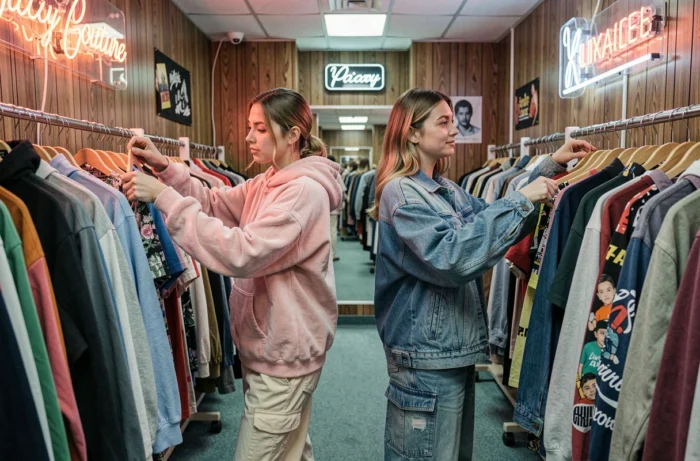
The physical retail market supports this movement. The opening of new points of sale dedicated to historical brands like Hollister shows that demand exceeds online commerce and vintage markets. Consumers are seeking a complete brand experience, with the sensory universe (music, fragrance, scenography) that characterized the boutiques of the time.
The Y2K revival has surpassed the stage of the classic nostalgic cycle. The pieces circulating today are not mere reissues: they incorporate updated cuts, reworked materials, and collaborations designed for an audience that discovers these codes as much as it rediscovers them. The next step is likely to play out in the realm of technical accessories (glasses, bags, platform shoes), where the scope for reinterpretation remains the widest.