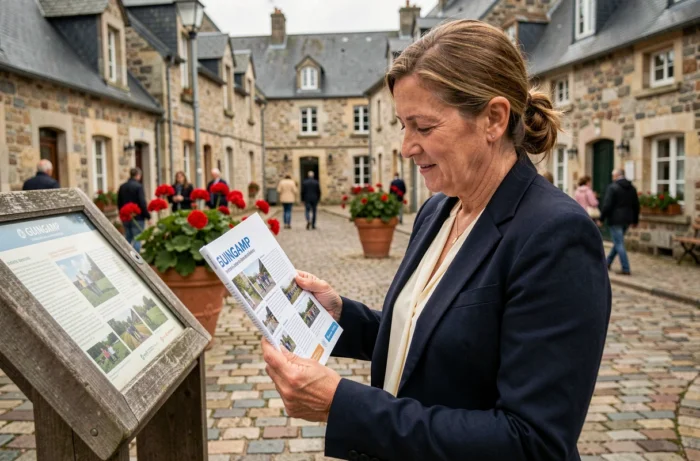
When looking for a primary care physician, a bus schedule, or assistance to renovate one’s home in the Guingamp area, the first difficulty is often knowing which door to knock on. The Guingamp-Paimpol Agglomeration community brings together several dozen municipalities between Armor and Argoat, with responsibilities that go well beyond waste collection or road maintenance.
This is a concrete administrative level, where investments in drinking water, mobility, or housing policy are decided.
Guingamp-Paimpol Mobility Transport Network: What Changed in 2026
Taking the bus between Guingamp and Paimpol was until recently a challenging endeavor. Low frequencies, unclear schedules, and the absence of a digital solution for booking a trip. Since the summer of 2026, the Guingamp-Paimpol Mobility network has been completely restructured.
Three new lines (A, B, C) serve Guingamp, and two additional lines (D, E) cover the Paimpol area. The operating hours have been extended, and some lines now run every 45 minutes, which is about twice as often as before the overhaul.
For users who do not have a stop nearby, a mobile app allows them to book a trip up to an hour before departure, with a 100% digital M-ticket. No need to visit an agency to purchase a ticket. Practical information, schedules, and the interactive map of the network are available on cc-guingamp.fr, which also centralizes access to other services in the agglomeration.
A Mobility House opened in Paimpol in 2026. It is a physical counter where one can obtain information about the bus network, carpooling, or mobility assistance. For residents living far from town centers, this contact point changes the game.
Investments in Drinking Water and Fiber Optics in the Area
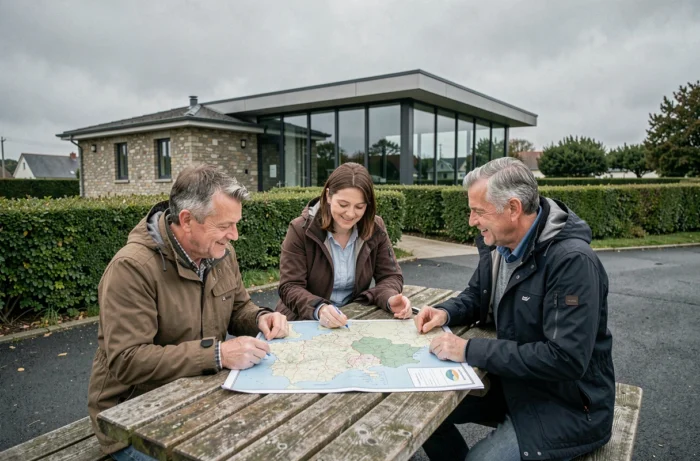
We often talk about the tourist or economic assets of a territory. However, the least visible investments are often those that weigh the most on daily life. Guingamp-Paimpol Agglomeration has allocated more than 11 million euros to structural projects for the period 2024-2027, according to the agglomeration magazine published in August 2026.
Part of this funding concerns the drinking water network and sanitation. In a rural area where some pipelines date back several decades, leaks represent a significant loss. Ongoing work aims to reduce these losses and secure water supply, including in the most remote municipalities.
The other aspect concerns the deployment of fiber optics. For self-employed workers based in inland Brittany, access to a decent bandwidth is crucial for the viability of their business. Feedback on this point varies by municipality, but the stated goal is to cover the entire territory by the end of the term.
Social Housing and Habitat: The Concrete Levers of the Agglomeration
Finding affordable housing in the Guingamp area is not always easy, especially for young households or people with modest incomes. The agglomeration has the responsibility for the local housing program, which allows it to directly manage social housing policy.
In practice, this translates into several actions:
- Establishing land reserves to build new social housing in municipalities where demand exceeds supply
- Financial assistance for the energy renovation of old housing, in connection with national programs
- Support for property owners and tenants in their administrative procedures, through local offices
The intercommunal local urban planning plan (PLUi) also regulates construction rules. It is a document that defines where one can build, at what density, and with what landscape constraints. For a real estate project developer, it is the first document to consult before purchasing land.
Health and Proximity Services in the Guingamp-Paimpol Area
Medical demographics remain a tense issue in Côtes-d’Armor. The agglomeration is working on the installation of healthcare professionals by offering suitable premises and support to practitioners considering settling in the area.
The youth center in Guingamp, which recently organized open days, illustrates another aspect of intercommunal action: access to services for young residents of the territory. Workshops, guidance support, cultural activities – these programs are often unknown even though they operate year-round.
The Guingamp media library has also evolved its offerings for the 2026 school year, including a free subscription and new open mic events. For a territory that covers both urban areas and dispersed rural municipalities, the pooling of cultural and health facilities between municipalities is the only way to maintain an adequate level of service without exploding municipal budgets.
Economic Development Between Coast and Argoat
The Guingamp-Paimpol territory extends from the bay of Paimpol to the inland lands of Argoat. This dual identity, maritime and rural, is reflected in the economic fabric:
- Market gardening and agri-food are historical sectors, with one of the largest vegetable basins in Brittany
- The coastline generates seasonal tourist activity around the bay, coastal paths, and maritime heritage
- A technology hall dedicated to cosmetics and agri-food provides local businesses with a shared research and development tool
The agglomeration supports project developers with dedicated services: assistance with establishment, provision of premises in business zones, support for business creation. The creation and management of these zones fall directly under intercommunal competence.
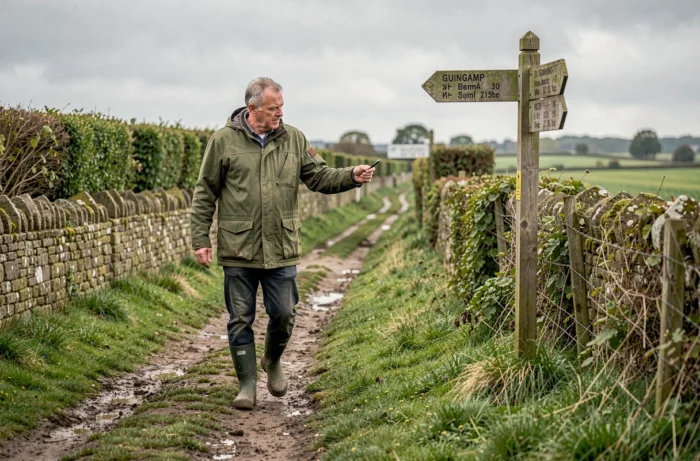
The Trieux, a river that crosses the territory, also structures part of the leisure and sporting events offer. This is an axis that the agglomeration promotes to attract new residents, beyond just the argument of a lower cost of living than on the northern Breton coast.
Intercommunal cooperation remains an administrative level that is not very clear to many residents. What makes the difference in Guingamp-Paimpol is the recent concentration of investments in very concrete issues: getting around, housing, accessing water, and digital services. The current term focuses on these fundamentals, and the initial results on mobility show that the shift has been made.