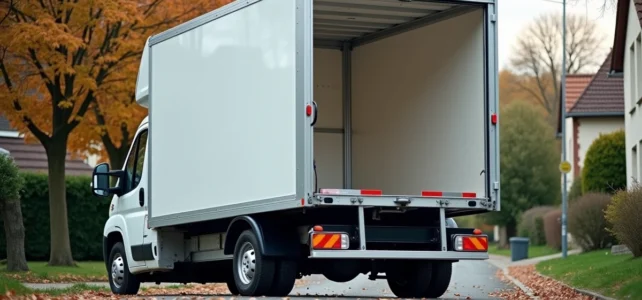
When preparing for a studio move or delivering equipment to a construction site, the question quickly arises: is a 10 m3 truck sufficient, or should we opt for a larger size? The answer depends less on the gross volume than on the actual dimensions of the box and the weight we can load. Two data points that rental sheets often summarize in one line, without providing the keys to make a decision.
Payload of a 10 m3 truck: the figure that limits before volume
On the ground, we rarely reach the volume limit before the weight limit. A 10 m3 van has a GVW of 3,300 to 3,500 kg depending on the models. Subtract the empty weight (around 1,780 kg for a common model), and there is about 1,390 kg of usable payload left.
In practical terms, this means that a load of boxes of books or ceramic tiles can exceed this limit long before filling the box. Conversely, for lightweight furniture (bed base, sofa, disassembled shelves), we fill the volume without ever approaching the maximum weight.
This distinction is crucial when comparing the dimensions of a 10 m3 truck among various rental companies. Two vans labeled “10 m3” do not necessarily have the same GVW or the same empty weight, which changes the loading margin by several dozen kilos.
Adding a passenger and their personal belongings further reduces the available load. You can easily lose 80 to 100 kg per additional occupant, while the cabin generally accommodates three seats.
Interior and exterior dimensions: what fits and what gets stuck
The exterior dimensions of a 10 m3 van are around 5.80 m in length, 1.86 m in width, and 2.34 m in height. This size fits in almost all underground parking lots (the 2.40 m barrier is rarely exceeded).
Usable dimensions of the box
What really matters is the interior space. On a representative model, you have:
- Usable length of about 3.44 m, sufficient for a three-seater sofa placed in the direction of travel
- Usable width of about 1.75 m, allowing a washing machine (60 cm) to fit next to a standard refrigerator
- Usable height of about 1.68 to 1.84 m depending on the version, a point to check if transporting a tall non-dismantlable wardrobe
The interior height is the classic trap. A 2 m wardrobe does not fit upright in most 10 m3 trucks. You either have to lay it down (and it then takes up the entire width) or disassemble it.
The side opening changes the game
Many 10 m3 vans have a sliding side door in addition to the rear doors. On the ground, this opening makes it easier to load long items (boards, rods, headboards) without having to slide everything from the back. This is a selection criterion often overlooked at the time of booking.
Loading distribution in a 10 m3: costly mistakes
Filling a moving truck is not like playing Tetris. The distribution of weight directly affects road handling and fuel consumption.
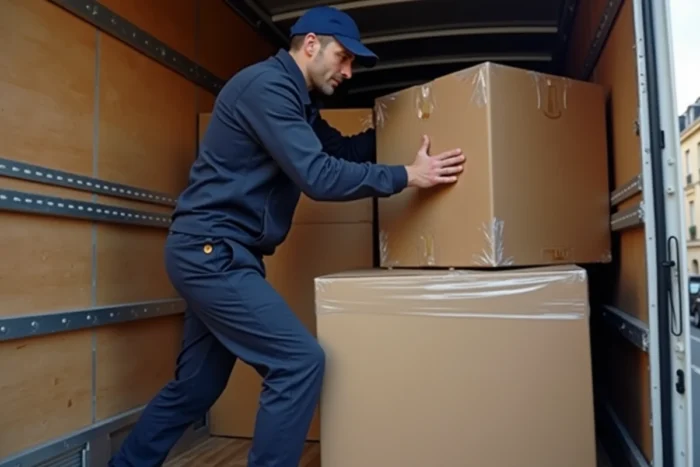
The heaviest loads should be placed on the floor, as close to the rear axle as possible. A washing machine or a stack of boxes of dishes placed high, near the doors, creates a pendulum effect in turns. On the highway, the van becomes unstable as soon as the side wind blows.
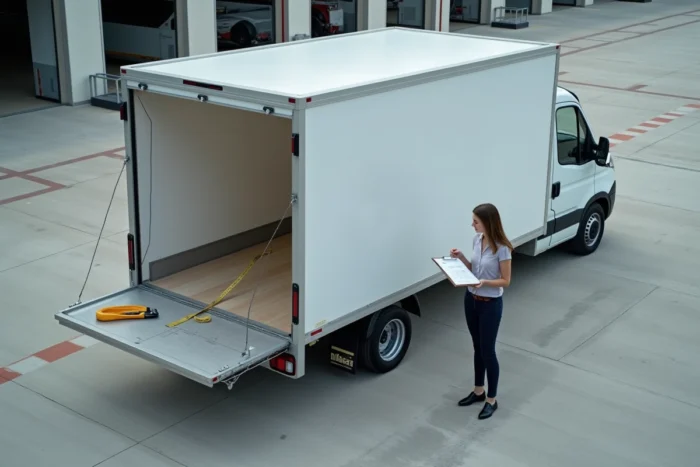
Another underestimated point: the loading height. Stacking boxes to the ceiling without securing them causes sliding during braking. A few tie-down straps (often provided by the rental company, to be checked) solve the problem.
10 m3 truck: for what type of housing and what volume of furniture
A 10 m3 truck is typically suitable for moving a studio to F2 apartment, or about 20 to 30 m2 of living space. In practice, here’s what the box can hold in one trip:
- A double bed (mattress + bed base), a two-seater sofa, and a table with chairs
- A refrigerator, a washing machine, and a television
- About fifteen to twenty standard boxes
- A few additional items (bicycle, vacuum cleaner, small side table)
Beyond a well-furnished F2, opinions vary on this point: some manage to fit an F3 by optimizing every centimeter, while others need to make two trips. The actual volume depends as much on the loading method as on the amount of furniture.
When to switch to a 12 m3 or 20 m3
If the housing exceeds 40 m2 or if the furniture includes bulky pieces (bookshelf, sideboard, upright piano), the 10 m3 requires several trips. A 12 m3 offers about 2 m3 more for a slightly larger exterior size. For an F4 or a house, a 20 m3 utility vehicle avoids multiple trips but requires more driving skill.
Permit B and driving a 10 m3 van: what you need to know
As long as the GVW does not exceed 3,500 kg, a B permit is sufficient. All 10 m3 vans offered for rent fall into this category. Rental companies generally require at least three years of driving experience, except for young driver options (minimum one year with additional insurance).
Driving remains accessible: the size is comparable to that of a large minivan, the gearbox is manual in most cases, and fuel consumption remains moderate despite the volume of the box. The main adjustment concerns blind spots, which are significantly larger than on a regular car. Careful adjustment of the mirrors before departure avoids most unpleasant surprises while maneuvering.
One last practical detail: the fuel cap is usually located on the driver’s side, but this can vary by model. It’s better to locate its position before getting stuck on the wrong side at the gas station.