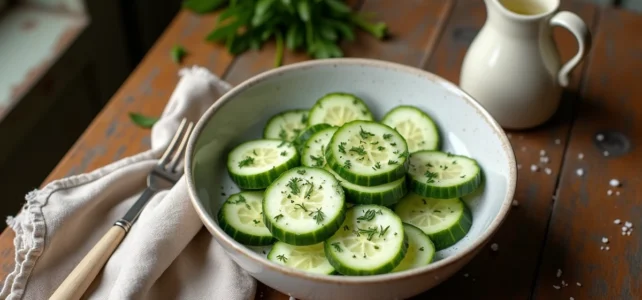
The cucumber with cream is based on a technical paradox that most mainstream recipes overlook: the cucumber is made up of more than 95% water, while cream is a fatty emulsion. Combining the two without ending up with a diluted soup requires prior treatment of the vegetable that is more about transformation than simple cutting.
Salting and squeezing the cucumber: the technical gesture that determines everything
Salting is not a decorative option. It determines the consistency of the final seasoning. Without this step, the cucumber’s plant water dilutes the cream within minutes, resulting in a watery, acidic, unappealing salad bowl.
We observe that the most accomplished recipes share a three-step protocol: slice, salt, squeeze with a cloth. Salting generally lasts about twenty minutes. The subsequent rinsing removes excess sodium. Manual squeezing removes the maximum amount of residual water. It is this last step that quick recipes sacrifice, directly affecting the texture.
A poorly squeezed cucumber releases its water into the cream within the first quarter hour of resting. The result is a sparse sauce and a limp cucumber. In contrast, rigorous salting produces firm, slightly translucent slices that absorb the seasoning instead of drowning in it.
To delve deeper into the origin of cucumber with cream on La Cuisine de Watoote, we find that this salting technique existed long before the dish became a summer classic.

Aromatic profile of cucumber with cream: from minimalism to contemporary herbism
The traditional version was limited to three ingredients: cucumber, thick fresh cream, salt. This austerity long confined the dish to the realm of functional garnish, served alongside fish or cold meat.
The systematic addition of fresh herbs has transformed the dish into a standalone appetizer. Dill, chives, mint, sometimes all three together: recent publications show a clear shift towards livelier flavor profiles. Acidity follows the same trend, with the introduction of lemon or apple cider vinegar where white wine vinegar once reigned alone.
This aromatic shift is not trivial. It repositions cucumber with cream halfway between a French composed salad and preparations from other culinary traditions. Greek tzatziki, Indian raita, or Scandinavian cucumber salad share the same foundation (gourd, dairy product, herb, acid). The French version stands out by using thick fresh cream instead of yogurt, resulting in a richer and less acidic outcome.
Thick fresh cream, yogurt, or plant-based alternative
Replacing cream with Greek yogurt lightens the recipe but significantly alters the texture. Yogurt brings a lactic acidity that competes with the seasoning vinegar. In this case, we recommend reducing or omitting the added acid.
Plant-based alternatives (soy cream, coconut cream) pose another problem: they do not handle prolonged contact with salt and acid well. Thick fresh cream remains the most stable binder for cucumber with cream intended to wait in the refrigerator.
Cucumber with cream as a marker of seasonality in French cuisine
Cucumber with cream has acquired a special status in the French culinary calendar. Its appearance on tables coincides with the first outdoor cucumbers, and its disappearance with the last autumn harvests. This role as a seasonal marker partly explains why the dish has resisted trends.
The anti-heat positioning has accelerated its spread in recent years. Culinary media now present it as an express response to high temperatures: no cooking, a preparation of a few minutes, a fresh and satisfying result. This “seasonal recipe” framing gives it recurring visibility every summer, well beyond the circle of traditional cooking enthusiasts.

The cucumber itself has benefited from a resurgence of interest due to its versatility. It can be found in gazpacho, frozen velouté, or raw tagliatelle accompanied by smoked salmon or shrimp. Cucumber with cream remains the foundation of this diversification: it is often the first recipe through which a home cook learns to work with this vegetable.
Common mistakes and technical points of caution
Excessive salting is as problematic as its absence. A cucumber left too long in salt loses its crunch and becomes rubbery. The balance lies around moderate salting, sufficient to extract surface water without softening the flesh.
- Seasoning too early (cream added before complete squeezing) irreparably dilutes the sauce and cannot be salvaged.
- Fresh herbs should be added at the last moment. Dill and mint blacken with prolonged contact with acid and salt.
- Light cream (15% fat) does not hold in sauce: it separates and leaves a grainy deposit at the bottom of the dish.
- Seedless cucumber yields a drier and more uniform result but removes some of the concentrated vegetable flavor found in the seeds.
A successful cucumber with cream is judged by the absence of liquid at the bottom of the dish after an hour of refrigeration. If juice accumulates, the salting or squeezing has been insufficient.
Storage and serving
The dish can be stored in the refrigerator but gradually loses its structure. Beyond a few hours, the cucumber continues to release water. Preparing the base (salted and squeezed cucumber) in advance and only adding the cream and herbs at the time of serving remains the most reliable method for a clean result.
Cucumber with cream has traversed decades without radical changes to its structure. Its longevity is due to a rare balance between ease of preparation and technical demands on a single gesture, the salting. It is this gesture that separates a banal appetizer from a mastered dish, and it is probably this that will continue to make the difference on French tables every summer.