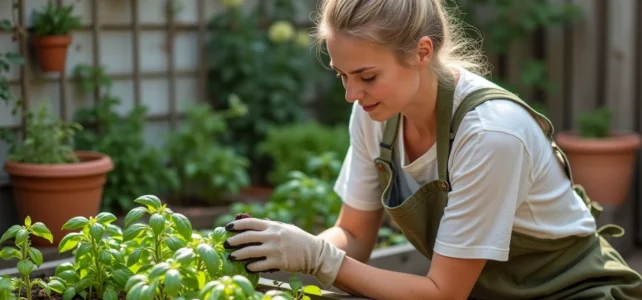
A high-performing natural vegetable garden relies less on the volume of work and more on the quality of interactions between soil, plants, and microorganisms. Here, we discuss the technical levers that are often underestimated in general guides, those that make the difference between a garden that survives and one that produces sustainably without synthetic inputs.
Carbon/Nitrogen Ratio of Mulch: The Parameter Required by the Natural Vegetable Garden
Mulching is not just about covering the soil. Its effectiveness depends on the carbon/nitrogen (C/N) ratio of the materials used. A mulch that is too carbon-rich (raw wood chips, dry wheat straw) mobilizes nitrogen from the soil during its decomposition, leading to a temporary nitrogen deficiency in the crops in place.
We recommend layering a nitrogen-rich layer (dried grass clippings, comfrey leaves) under the carbon mulch. This stratification accelerates decomposition and releases nutrients directly into the root zone. The total thickness should remain substantial to limit evaporation, in accordance with ADEME’s recommendations, which advocate for systematic and thick mulching to keep the soil cool for longer.
Adapting the type of mulch to the growth stage also changes the game. For direct sowing (carrots, radishes), a fine and partially decomposed mulch prevents blocking the emergence. For transplanted seedlings (tomatoes, zucchinis), a coarse mulch applied after establishment limits competition from weeds without hindering growth. Approaching the vegetable garden according to L’Herbe sous le Pied allows for complementing this approach with technical pathways suited to each family of vegetables.
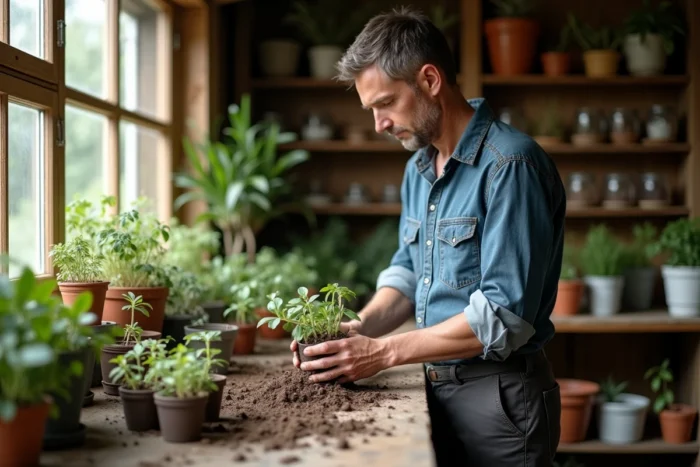
Water Management in the Vegetable Garden: Grouping Crops by Water Needs
Grouping water-hungry plants in the same area concentrates watering and reduces waste. This water zoning, still rarely practiced in home gardens, constitutes the first lever for resource conservation.
Specifically, cucurbits, celery, and salads occupy the area closest to the water source. Tomatoes, peppers, and eggplants, which tolerate moderate water stress after fruit set, form a second block. Legumes, garlic, and onions, which are less demanding for water once established, are placed in the farthest zone.
Watering at the Base and Time of Day
Watering at the end of the day limits evaporation but encourages fungal diseases if the foliage remains wet at night. We prefer early morning watering, directly at the base, so that the soil absorbs the water before temperatures rise.
A vegetable garden designed according to this water zoning consumes significantly less water than a garden planted without spatial logic. In the context of recurring droughts, this organization becomes a prerequisite, not a luxury.
Crop Associations and Soil Life in the Natural Vegetable Garden
Crop associations are not limited to the classic “tomatoes-basil”. Their interest lies in three specific mechanisms:
- Root Complementarity: associating a taproot plant (carrot, parsnip) with a shallow-rooted plant (lettuce, spinach) exploits different soil horizons without direct competition
- Olfactory Disruption of Pests: alliums (onion, leek) interspersed between rows of carrots reduce attacks from the carrot fly through olfactory confusion
- Symbiotic Nitrogen Fixation: legumes (beans, peas) host Rhizobium bacteria in their root nodules, which capture atmospheric nitrogen and partially return it to neighboring crops
These interactions work provided that planting distances are respected. If too close, companion plants compete for light and water. Sufficient spacing between associated rows preserves air circulation and limits fungal pressure.
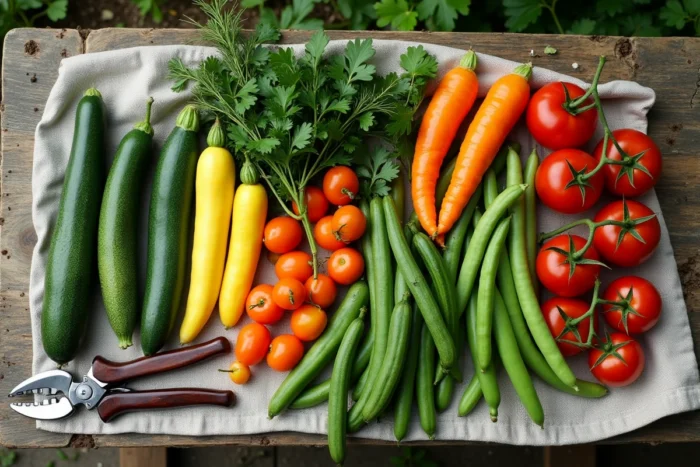
Soil Fertility Without Synthetic Fertilizers: Surface Compost and Green Manures
Surface composting involves directly depositing non-diseased plant waste on the growing beds, without going through a compost bin. Decomposition occurs in situ, nourishing the soil fauna (earthworms, springtails, mites) that structure the soil in return.
This technique works particularly well in autumn and winter when the beds are freed up. Bean tops, healthy tomato stems, shredded dead leaves: all this organic material transforms into stable humus by the following spring.
Green Manures Between Crops
Sowing a green manure (mustard, phacelia, crimson clover) as soon as a bed is freed prevents nutrient leaching from rainfall. A bare soil loses a significant portion of its nitrates within a few weeks of autumn precipitation. The green manure captures these elements in its biomass and returns them after mowing and superficial incorporation.
The choice of species depends on the planned rotation. Mustard before cabbages should be avoided (same family of brassicas, risk of amplifying pathogens). A vetch-rye mix offers effective coverage and a good C/N balance upon incorporation.
Protecting Vegetable Crops Without Chemicals
Fine mesh insect nets remain the most reliable physical barrier against flea beetles, cabbage worms, and vegetable flies. Their installation should occur immediately after sowing or transplanting, before pests can lay eggs.
Plant extracts and decoctions act as prevention, not as curatives. A diluted nettle extract strengthens plant resistance through its nitrogen and trace element content. A horsetail decoction, rich in silica, hardens cell walls and slows the penetration of fungi. Applying these preparations to plants already severely affected yields almost no results.
Crop rotation over three or four years remains the cornerstone of health prevention. Never replant a solanaceous (tomato, potato, pepper) in the same spot for two consecutive years limits the cycle of soil-borne pathogens like blight or nematodes. This principle, simple in theory, requires keeping an annual planting plan, even a rough one, to maintain track of rotations.