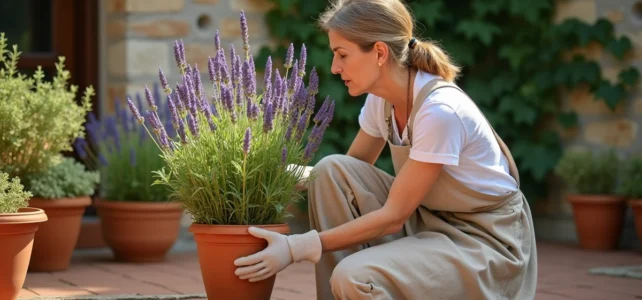
A lavender that darkens at the base in the middle of July does not necessarily suffer from overwatering. Before pruning or moving the plant, an accurate root diagnosis is crucial for the plant’s survival. We review the causes that classic guides underestimate and the technical responses suitable for each situation.
Mineral or organic mulch: an underestimated factor in lavender decline
The choice of mulch radically alters the microclimate around the collar. A thick organic mulch (pine bark, wood chips, straw) maintains a constant moisture level in contact with the wood of the lavender. This area remains moist long after surface evaporation, creating ideal conditions for the development of Phytophthora cinnamomi and other soil fungi.
We recommend using exclusively mineral mulch for lavenders: limestone gravel, pumice, or crushed slate. These materials drain rainwater away from the collar within minutes. In the beds where we observe replacements of organic mulch with gravel, the survival rate of weakened plants significantly improves from the following season.
When wondering what to do if the lavender is sick, the first reflex should be to clear the collar and examine the type of mulch in place, even before suspecting a pathogen or a watering problem.
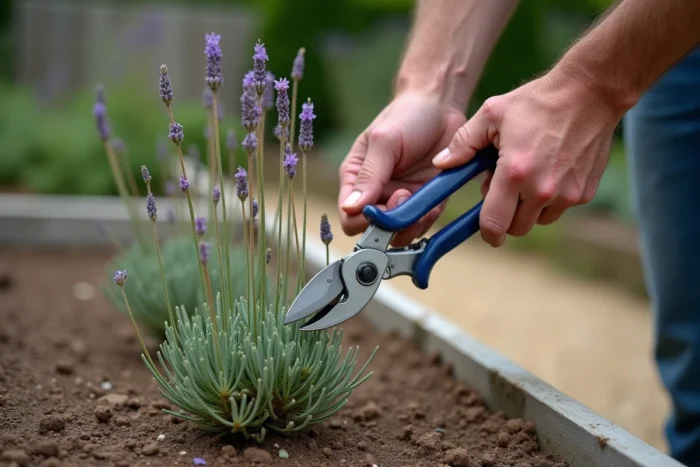
Root diagnosis of lavender: distinguishing Phytophthora, water stress, and aging
Three situations produce almost identical aerial symptoms (gray leaves, dry branches, bare base), but the roots tell very different stories.
- Phytophthora rot: the roots are brown, soft, and emit a sour smell. The cambium under the bark of the large roots is brown-black instead of cream-white. The damage progresses from the bottom to the top of the plant within weeks.
- Severe water stress (heatwave, prolonged hot wind): the fine roots are dry and brittle like wire, but the main roots remain clear. The foliage becomes crispy without turning black.
- Natural aging: the center of the plant is entirely woody, without green foliage. The roots are functional, but the plant no longer produces basal shoots. This phenomenon affects lavenders older than five or six years that have never been pruned properly.
Only a direct examination of the roots (removing from the pot for a potted subject, or probing with a fork in the ground) can provide clarity. Acting on watering when the problem is fungal accelerates the death of the plant.
Combination of heatwave and hot wind: a recent cause of sudden drying
Classic articles focus on excessive moisture as the main factor. Field reports from recent seasons show another reality: the combination of extreme temperatures and drying wind causes irreversible wilting within days, even on well-established lavenders.
The mechanism is simple. Hot wind increases leaf evapotranspiration beyond what the roots can compensate for, even in still moist soil. The leaves dehydrate faster than the roots can absorb water. The result resembles a classic drought hit, but it occurs on properly irrigated subjects.
The most effective solution remains the choice of variety. Lavandins, particularly Lavandula x intermedia ‘Grosso’, tolerate these episodes better due to a deeper root system and tougher foliage. Landscape architects now prefer these hybrids in urban beds exposed to full sun, specifically to reduce losses related to recent summers.
Emergency actions during a heatwave on lavender
If the foliage starts to gray during an extreme heat episode, watering at the base (not on the foliage) at the end of the day can limit damage. The water must reach the root zone, so slow and deep watering is preferable to quick spraying.
Do not prune during a heatwave. Any cut exposes fresh tissues to accelerated dehydration. Wait for cooler temperatures to assess the actual extent of the damage.
Soil and drainage: correcting the planting error of lavender in heavy soil
A lavender planted in compact clay soil is doomed in the medium term, regardless of the care given to watering. The soil must drain water within a few hours after rain. If a puddle persists at the base of the lavender, the substrate is unsuitable.
The correction involves uprooting the plant in the fall, digging the planting hole to a sufficient depth, and filling it with a garden soil-gravel mix (half and half). Adding coarse sand at the bottom further improves drainage. We avoid pure potting soil, which retains too much moisture for lavender.
In pots, the ideal substrate combines topsoil, river sand, and fine gravel. The pot must have drainage holes at the bottom, without a saucer. A potted lavender placed on a saucer full of water develops root rot in less than two weeks in hot weather.
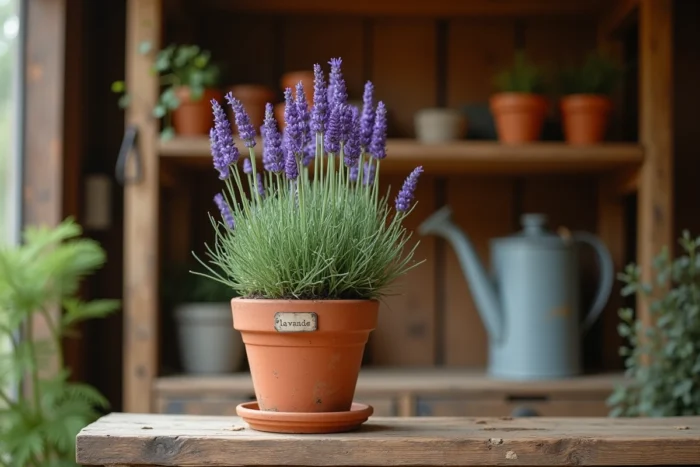
Rescue pruning and recovery: protocol according to the condition of the plant
Pruning is not a universal remedy. On a plant affected by Phytophthora, pruning does not help: the problem is underground. However, on an aged or heat-damaged plant, rescue pruning at the right time can stimulate new growth.
Partially dry plant with residual green
Prune the dead branches back to the visible green wood. Do not go down into the bare old wood: lavender almost never regrows on wood without leaves. Perform this pruning at the end of summer or early autumn, when the nights cool down.
Completely lignified plant with no green shoots
The prognosis is unfavorable. If no green shoots appear after moderate watering spread over three weeks, the plant is dead. Uproot it, correct the soil, and replant a new subject – preferably a lavandin if your exposure is scorching.
One last often-overlooked point: after uprooting a dead plant due to root rot, do not replant lavender in the same spot without renewing the substrate. Fungal spores remain active in the soil for several seasons.