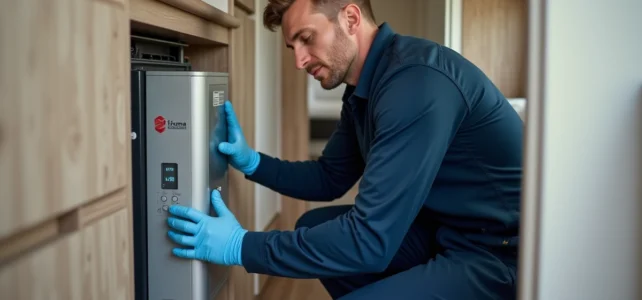
We are in the middle of winter, the Combi 4 refuses to start, and the CP plus panel displays a flashing code. The reflex is to look for the code/fault correspondence in a list. The problem: applying a generic solution without checking the actual symptom or the exact version of the device often leads to unnecessary part replacements. Before ordering anything, we can avoid most diagnostic errors with a few field checks.
Field Diagnosis of the Truma Combi 4: Cross-Referencing the Code with the Actual Symptom
Online content often mixes references for the Combi 4, Combi 4E, and Combi 4 DE. However, error codes can differ depending on the variant and the type of control panel installed. An identical code on a CP plus and an old analog panel does not always point to the same cause.
Before any intervention, we note three elements: the exact code displayed (number or sequence of flashes), the observable symptom (no heating, lukewarm water, stopping during a cycle), and the version of the Combi (label on the device chassis). This cross-referencing helps avoid going down the wrong path.
To have an overview, the list of Truma Combi 4 error codes details each code with its common causes and initial corrective actions. We use it as a starting point, not as a final verdict.
An error code without an observed symptom is never sufficient for a reliable diagnosis. The Combi 4 shares several sensors between the heating circuit and the hot water circuit. A faulty temperature sensor, for example, can manifest as a heating shutdown in one case or as scalding water in another, while the displayed code remains the same.
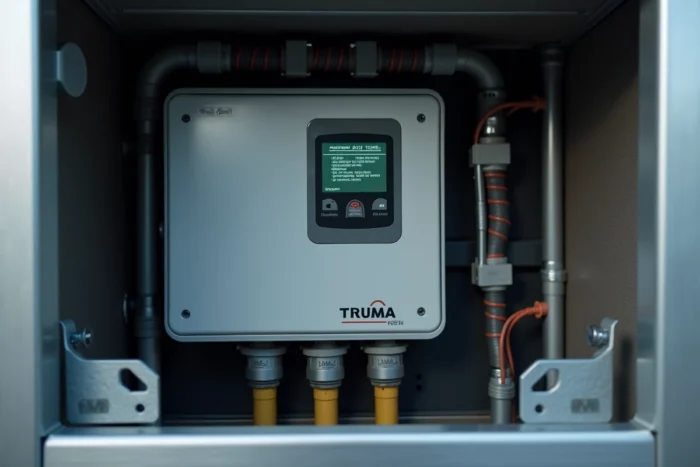
Most Common Truma Combi 4 Error Codes and Checks Before Replacement
Some codes appear on the majority of Combi 4 units in circulation. Here are the most common field situations and what we check before touching a part.
Gas Supply Error
The code indicating a lack of gas (often associated with W517H on the CP plus panel) is the most common. We first check the obvious: bottle open, safety valve, regulator in good condition. Next, we inspect the hose and connections. A porous hose or a poorly tightened connection causes intermittent cuts that the panel interprets as a total lack of gas.
If gas is indeed reaching the Combi, the problem shifts to the internal gas valve or the ignition electrode. We distinguish between the two by listening: a regular clicking without flame points to gas reaching the burner, while total silence indicates the electric control of the valve.
Overheating Error or Temperature Sensor
Codes related to sensors (type EOS or BOS) often appear after prolonged operation or high outside temperatures. Before replacing a sensor, we check its connectors. A poor contact on a connector heated by normal operation generates exactly the same code as a faulty sensor. We disconnect, clean, reconnect, and restart a complete cycle.
Feedback varies on this point: some owners resolve the issue permanently by tightening a connector, while others find the fault returns after a few hours. In this second case, the sensor itself is likely to blame.
Electrical Supply Error
The code W255H (or equivalent depending on the panel) indicates insufficient voltage. We measure the battery voltage directly at the Combi terminals, not at the auxiliary battery. Voltage drops in the wiring between the battery and the device can sometimes trigger the error, especially in aging installations with undersized cable sections.
- Check the voltage at the Combi 4 terminals with a multimeter, engine off then running
- Inspect the fuses dedicated to heating on the vehicle’s electrical panel
- Check the condition of the terminals and grounds, particularly the Combi chassis ground
Combustion Air Motor Error: The Trap of Quick Diagnosis
The codes E133H and E515H point to the combustion air motor, a peripheral component that code lists often treat in one line: “replace the motor.” In the field, this motor rarely fails outright.
The most common cause is a blockage of the exhaust outlet for burnt gases. A nest of insects, accumulated combustion residues, or a partially obstructed exhaust cap is enough to reduce airflow and drop the motor speed below the detection threshold. We disassemble and clean the outlet before ordering a new motor.
If the duct is clean, we measure the power supply voltage to the motor. A damaged cable or a corroded connector between the Combi and the motor produces the same symptom as a motor nearing the end of its life. Replacing the motor without this check amounts to treating the symptom without seeking the cause.

Truma Combi 4 Reset: When the Reset is Sufficient and When It Masks the Problem
Resetting the CP plus panel (long press or power cut) clears the error code and restarts a cycle. In the case of a one-off failure (corrected gas cut, recharged battery), this is the correct procedure. The Combi restarts, and everything works.
The trap is the repeated reset. If we have to reset the system more than twice for the same code within a few days, the reset solves nothing; it masks a defect that is worsening. Intermittent failures related to heat or connectors follow this pattern: the code appears when the Combi is hot, disappears after cooling and reset, then returns.
In this case, we proceed methodically:
- Note the time and conditions of each code appearance (outside temperature, duration of operation, heating or hot water mode)
- Check all accessible connectors when hot, wearing gloves, to detect any mechanical play
- Isolate the affected circuit: run the Combi in heating mode only, then in hot water mode only, to identify which circuit triggers the error
- If the fault persists after these checks, take the device to an authorized Truma workshop with the record of codes and conditions of appearance
A precise record of the circumstances of appearance saves time for the technician and avoids replacing expensive components by guesswork. The Combi 4 remains a reliable device, provided that the real cause is addressed rather than the displayed code.