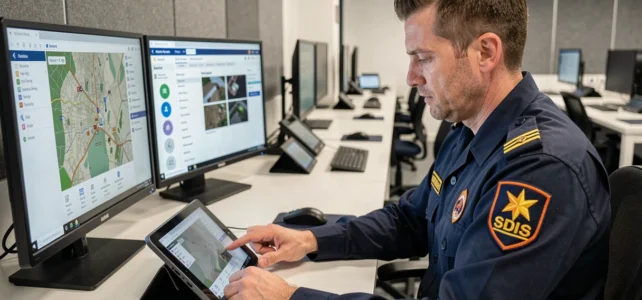
IRIS Fire structures the operational chain of the SDIS well beyond simple alert dispatching. The platform centralizes field data, duty schedules, and regulatory documents in a unique environment, profoundly changing the way departmental fire and rescue services manage their human and material resources.
Access to building safety sheets and operational preparation before intervention
The least utilized aspect of IRIS Fire remains the consultation of establishment safety sheets directly from the onboard terminal or the command post. Even before the van departs, the duty officer accesses information on hazardous storage, standardized firefighter access points, and the potential presence of vulnerable individuals on site.
This documentary layer changes the game for interventions in public establishments or industrial sites subject to risk prevention. A unit leader who knows the building’s configuration adapts their attack strategy from the reconnaissance phase, without waiting for a radio return from the CODIS.
We observe that this feature reduces decision-making times on complex incidents. When an article details the use of IRIS Fire on Jean-Louis Garret, it is precisely this field usage that stands out as the most differentiating compared to older alert management systems.
Prevention and knowledge of local risks are no longer confined to paper files archived in the fire station. They accompany the team on every call, enhancing the safety of both firefighters and victims.
Management of volunteer firefighters: schedules and availability in IRIS
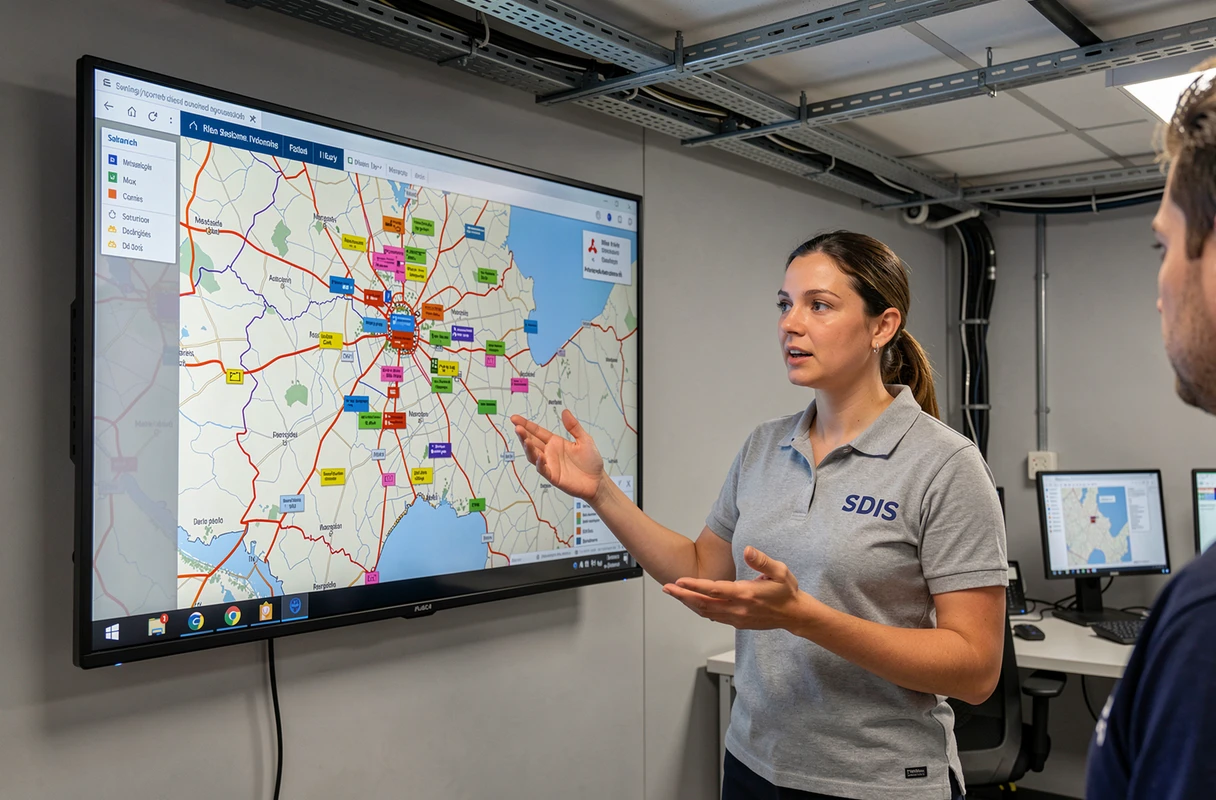
In most SDIS, volunteer firefighters make up the bulk of the deployable workforce. Their availability fluctuates according to their professional and personal constraints. IRIS centralizes availability declarations in real-time, eliminating the cascading phone calls that center chiefs know all too well.
The integrated planning module allows for cross-referencing scheduled duties, mandatory training, and on-call duties. As a result, the CODIS knows at any moment which human resources are actually deployable, by rank and specialty.
Reduction of administrative burden for center chiefs
A center chief managing several dozen volunteers spends considerable time validating duty schedules, tracking recertifications, and transmitting service records to the territorial grouping. IRIS automates part of these tasks:
- Tracking duty hours and automatic calculation of shifts, avoiding re-entry in a separate spreadsheet
- Alerts on training deadlines (first aid recertification, maintenance of fire skills), directly linked to the volunteer’s individual file
- Digital transmission of monthly reports to the SDIS administration service, with complete traceability
This administrative aspect is rarely highlighted, but it conditions a rescue center’s ability to maintain its operational potential without exhausting the management.
Multi-site coordination and information flow to the prefectural authority
The strength of IRIS lies in its ability to consolidate data from multiple rescue centers at the departmental level. During a major incident, the departmental director of fire and rescue services has a unique dashboard to manage reinforcement columns, track resource engagement, and report to the prefect.
This structured reporting is a regulatory requirement. The general code of local authorities entrusts the prefect with the direction of rescue operations as soon as the incident exceeds the municipal perimeter. Without a consolidated tool, operational synthesis relies on verbal reports, a source of errors and delays.
Interoperability with partner services
Rescue interventions regularly mobilize the SAMU, law enforcement, and sometimes the technical services of the municipality. IRIS structures inter-service exchanges through a standardized message format, preventing information loss during handovers or command transfers.
The mayor, as the police authority in their municipality, can also receive situational updates via the channels provided by the ORSEC system. This downward information chain secures the link between the SDIS and the local authorities involved in the event.

Documentary continuity and regulatory traceability in SDIS
Beyond pure operational aspects, IRIS ensures a structured archiving function. Each intervention generates a timestamped report, linked to the resources deployed and the personnel present. This traceability meets the SDIS’s obligations regarding feedback and potential litigation.
Safety commissions, annual activity reports submitted to the SDIS board of directors, and assessments intended for the departmental advisory commission rely on this data. An SDIS that fully utilizes IRIS significantly reduces its documentary production times compared to a compartmentalized operation between different software.
- Standardized intervention reports, exportable for insurers and judicial authorities
- History of individual training, usable during advancement commissions or validation of acquired skills
- Aggregated operational statistics by risk type (fire, rescue, technological risks), usable for the departmental risk analysis and coverage scheme
The recent trend towards integrating artificial intelligence tools to prioritize incoming calls fits within this structured data logic. Without a reliable and proper database, no sorting algorithm can function correctly.
IRIS Fire is not a modernization gadget. It is the informational backbone upon which an SDIS’s ability to fulfill its missions of prevention, protection, and rescue rests, from the moment the alert is triggered until the last archived document.